An unprecedented amount of snow has fallen in recent days, and forecasts predict similar winter weather for the rest of the week. Following heavy snowfall on Monday, a second wave arrived on Tuesday afternoon, bringing intense snowfall that lasted into the night. Due to the harsh weather conditions, disaster management agencies and emergency services were on high alert.
During the first 24 hours of snowfall, the National Ambulance Service (OMSZ) responded to a record 4,690 emergency calls nationwide, the organization’s spokesperson said on Tuesday. According to Pál Győrfi, paramedics were called to 755 cases of various injuries, many of which involved broken limbs.
In several places, with the help of disaster management, ambulances were able to continue on snowy, icy, typically mountainous road sections. In some places, paramedics were only able to reach patients on foot in the snow with their equipment, but everyone in need received the necessary care.
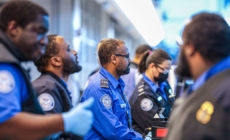
Paramedics and firefighters working to handle the increased workload caused by snowfall on January 6, 2026. Photo: MTI/BM
Pál Győrfi emphasized that paramedics are prepared to respond to cases expected due to the continuing snowfall, and that there is ongoing coordination between the operational headquarters and the emergency response organizations.
Due to the extreme winter weather, professional disaster management agencies have carried out a total of 323 firefighting and technical rescue operations across the country so far. A total of 654 professional firefighters with 152 vehicles took part in the interventions, assisted by municipal and volunteer firefighters and rescue organizations, said the National Directorate General for Disaster Management.
In most cases, vehicles stuck in the snow or involved in accidents, including trucks and buses, needed to be rescued.
During the night, weight restrictions were imposed on vehicles over 7.5 tons on several main and express roads and motorways, and some sections were closed due to snow drifts.
Due to the weight of the snow, the roof of a family house collapsed in Akasztó, and three people had to be rehoused. Power outages in the Szeged and Bordány areas affected over two thousand consumers.

Snow-covered Teréz Boulevard in Budapest on January 7, 2026. Photo: MTI/Purger Tamás
All state agencies are working at full capacity to manage the disruption caused by the extraordinary snowfall, the spokesperson for the National Directorate General for Disaster Management said at a Wednesday morning press briefing in Budapest following the task force meeting.
Lieutenant Colonel Dániel Mukics reported that road management, the police, ambulance services, disaster management, the military, hospitals, and public transport operators including Volán and MÁV are all fully mobilized, carrying out extraordinary work to restore normal conditions.
He added that in some settlements, including the capital, access to public institutions has been temporarily limited. The task force is urging local governments to ensure hospitals, schools, and medical centers remain accessible.
Additionally, Fülöp Attila, State Secretary for Social Care Policy at the Ministry of Interior, announced that
a red alert came into effect at 8 a.m. on Wednesday, requiring social institutions to accommodate homeless people affected by the severe weather, regardless of their normal operational duties.
By Wednesday morning, traffic on the M1 motorway was severely disrupted after several trucks became stuck between Biatorbágy and Tatabánya. Rescue operations periodically halted traffic between kilometers 60–56 toward Budapest and 48–52 toward Hegyeshalom. According to Útinform, multi-kilometer traffic jams have formed in both directions, while detour routes, including main road 1 between Óbarok and Bicske, are also heavily congested.
Drivers should expect longer travel times on most motorways.
The surfaces of main and secondary roads across the country are snowy and slushy, and visibility may be limited due to the weather, the Minister of Construction and Transport announced on his Facebook page on Wednesday morning. He wrote that at this very moment, 481 machines are working on the Hungarian Public Road network to clear snow and de-ice the roads.
Train services are operating nationwide, though some disruptions remain. In the western part of the country, most trains are running 15–20 minutes late, with a few experiencing even longer delays, he said.
Bus services are still unable to breathe a sigh of relief: typically, they are running with delays of 15-60 minutes throughout the country, and in some cases, certain settlements are not being served by buses.
Related article
Heavy Snowfall Causes Delays at Budapest Airport

Runway operations continue under highest alert as aircraft de-icing slows and some flights face delays or cancellations. Continue reading
Via MTI, Featured image: MTI/Varga György
The post Unprecedented Snowfall Strains Emergency Services and Disrupts Transport appeared first on Hungary Today.
Source link