On Morocco’s Atlantic coast, embraced by steady trade winds, lies the historical city of Essaouira — a city where whitewashed walls and blue shutters conceal centuries of global history. Once a strategic maritime hub and the final stop of Saharan caravans, Essaouira has long served as a bridge between Africa, Europe, and the wider world.
Indigenous roots and cultural crossroads
The region was first inhabited by Amazigh (Berber) tribes, who lived from fishing, salt trade, and coastal commerce. As early as antiquity, Phoenician and later Carthaginian sailors anchored near the nearby Mogador Islands, recognizing the strategic value of the natural harbor. During Roman times, the Atlantic trade routes brought further exchange and influence.
The modern city, however, was shaped in the 18th century by the Moroccan sultan Mohammed ben Abdallah (Sidi Mohammed III). Determined to centralize and control foreign trade, he commissioned European engineers — notably French architect Théodore Cornut — to design a fortified port city. The result was a remarkable blend of Islamic urban tradition and European military architecture, visible today in the city’s orderly streets and powerful sea bastions.
Photo: László Wiandt
Terminus of the trans-saharan caravans
For centuries, Essaouira stood as one of the principal endpoints of the trans-Saharan caravan routes. Camel caravans arrived from Timbuktu and Marrakesh, carrying gold, ivory, spices, gum arabic, and other precious goods. From here, ships transported merchandise to Portugal, France, England, and beyond.
This intense trade transformed the city into a cosmopolitan melting pot. Amazigh tribes, Arab merchants, European diplomats, and a prominent Jewish merchant community lived and worked side by side. In the 19th century, Jewish traders played a crucial intermediary role between sub-Saharan Africa and European markets, contributing to the city’s unique atmosphere of coexistence and exchange that still lingers today.
Photo: László Wiandt
Fortifications, seagulls and labyrinthine alleys
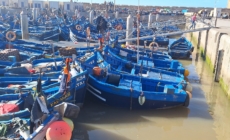
Essaouira’s seafront ramparts — known as the Skala — remain iconic. Cannons still face the Atlantic, while fishing boats painted in bright blue bob in the harbor below. The medina, a UNESCO World Heritage site, is a harmonious grid of narrow lanes, archways, hidden courtyards, and sunlit squares.
Former caravanserais and merchant houses have been transformed into boutique riads, art galleries, and refined restaurants. In the souks, silversmiths hammer intricate jewelry, woodworkers carve thuya wood into ornate furniture, and artisans weave colorful textiles. Craft traditions are not preserved as museum pieces here — they are lived daily.
Gastronomy and festivals
Essaouira’s cuisine celebrates the ocean. At the port, visitors can choose freshly caught sardines, sea bream, squid, or lobster to be grilled on the spot. In the medina, historic mansions now host contemporary restaurants where Moroccan spices meet modern culinary techniques.
The city’s cultural calendar is equally vibrant. The internationally renowned Gnaoua World Music Festival brings together traditional Gnawa musicians with jazz, blues, and world music artists from across the globe. During the festival, the entire city becomes an open-air stage, echoing with hypnotic rhythms of African spiritual music.
Photo: László Wiandt
Modern role: sport, leisure and luxury
Thanks to its constant Atlantic winds, Essaouira has become a paradise for windsurfers and kitesurfers. Its long sandy beach accommodates both beginners and experienced athletes. At the same time, the city offers refined boutique hotels, luxury seaside resorts, and tranquil hammams where Moroccan design meets contemporary comfort.
Beyond the beach, travelers can explore argan tree groves, ride camels across nearby dunes, or take day trips to Marrakesh and the foothills of the Atlas Mountains. Essaouira makes an ideal stop on a broader Moroccan journey that connects imperial cities, mountain landscapes, and Atlantic shores.
Photo: László Wiandt
Climate – when to Visit
Essaouira enjoys a mild, temperate climate year-round. Summers are warm but rarely oppressive thanks to ocean breezes, with temperatures typically ranging between 22–28°C (72–82°F). Spring and autumn offer ideal conditions for sightseeing and outdoor activities. Winters are cooler, around 15–20°C (59–68°F), yet sunny and pleasant — a welcome escape from colder European climates.
Why visit Essaouira?
Essaouira is more than a seaside retreat. It is a place where desert caravans once met ocean-going ships, where cultures blended, and where history is etched into every stone wall. Visitors come for the wind and waves, for the food and festivals — but they leave with something deeper: the sense of having touched a living crossroads of civilizations.
A legjobb élmény biztosítása érdekében olyan technológiákat használunk, mint a cookie-k az eszközadatok tárolására és/vagy eléréséhez. Ha beleegyezik ezekbe a technológiákba, akkor olyan adatokat dolgozhatunk fel ezen az oldalon, mint a böngészési viselkedés vagy az egyedi azonosítók. A hozzájárulás elmulasztása vagy visszavonása bizonyos funkciókat és funkciókat hátrányosan érinthet.
Functional
Always active
The technical storage or access is strictly necessary for the legitimate purpose of enabling the use of a specific service explicitly requested by the subscriber or user, or for the sole purpose of carrying out the transmission of a communication over an electronic communications network.
Preferences
The technical storage or access is necessary for the legitimate purpose of storing preferences that are not requested by the subscriber or user.
Statistics
The technical storage or access that is used exclusively for statistical purposes.The technical storage or access that is used exclusively for anonymous statistical purposes. Without a subpoena, voluntary compliance on the part of your Internet Service Provider, or additional records from a third party, information stored or retrieved for this purpose alone cannot usually be used to identify you.
Marketing
The technical storage or access is required to create user profiles to send advertising, or to track the user on a website or across several websites for similar marketing purposes.