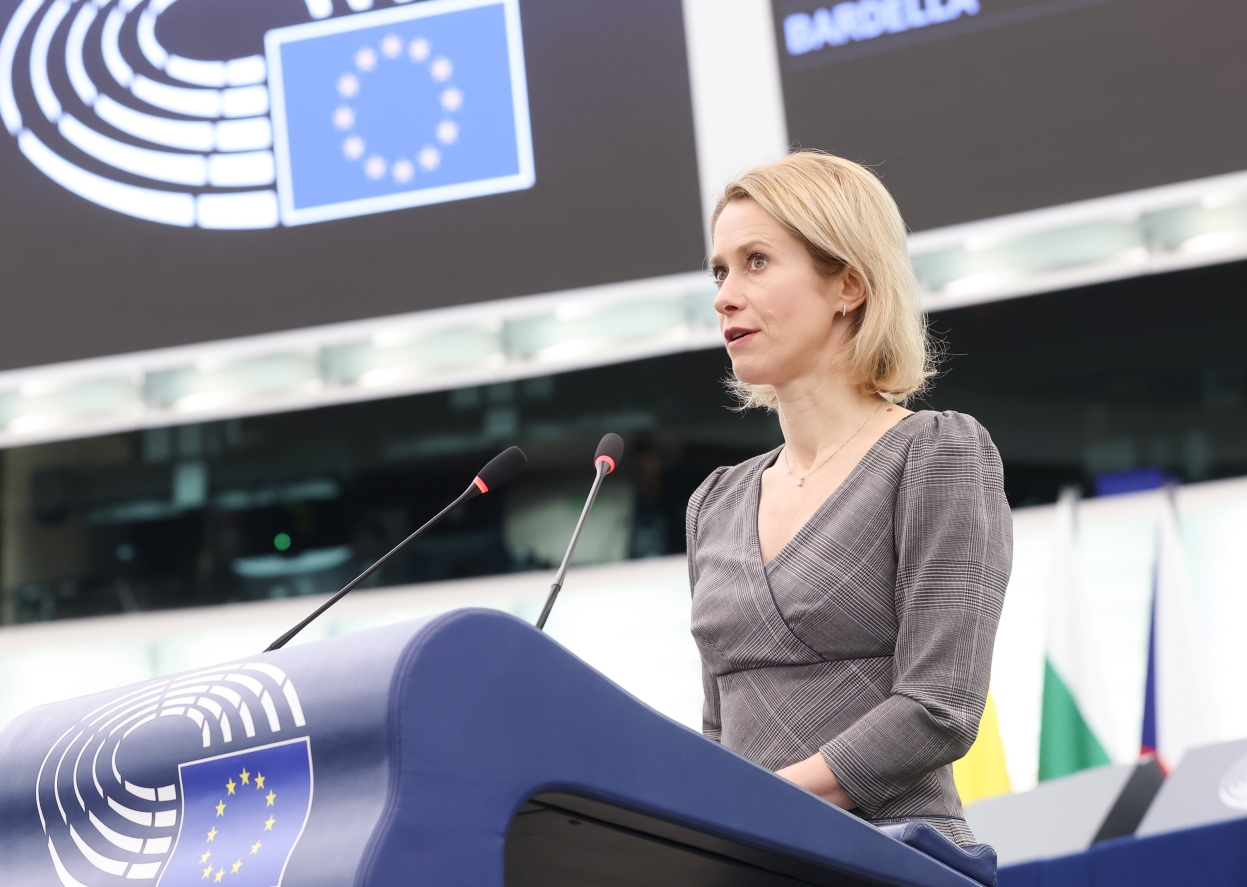
Unfortunately, no agreement was reached on the EU’s 20th package of sanctions against Russia, which is a step backward and does not send the message we would have liked to send today. However, work will continue, Kaja Kallas, the EU’s High Representative for Foreign Affairs and Security Policy, said Monday in Brussels at a press conference following consultations with EU foreign ministers.
Kaja Kallas pointed out that Hungary’s veto affects not only the 20th package of sanctions, but also the implementation of the €90 billion loan for Ukraine agreed in December. In this context, she explained that although elections are imminent in Hungary, given the country’s history, it is difficult to imagine that the Hungarian people would actually refuse to support the Ukrainian population in need.
I can hardly imagine that this would be an electoral advantage, but of course I do not know the political situation in Hungary in detail,”
the politician added. Moscow had not only attacked the pipeline, but also around 80 percent of Ukraine’s energy infrastructure, the High Representative emphasized. She said that Ukraine could not be blamed for focusing primarily on restoring energy supplies to the population in the winter cold.
Foreign Affairs and Trade Minister Péter Szijjártó reported after the meeting that two “shocking” things had come to light during the meeting: firstly, the High Representative wanted Hungary and Slovakia to send soldiers to Ukraine, and secondly, Kyiv was actually working with Brussels to block the transport of oil.
He pointed out that this meeting had yielded several insights, making it clear that Europeans were preparing for a long war, that they wanted to send soldiers and even more money to Ukraine as soon as possible, and that they were talking about the country’s future EU accession as an inevitable and self-evident matter.
As far as preparing for a long war is concerned, the Ukrainian foreign minister spoke about the goals for this year, i.e. for the whole year, on the battlefield (…)
Several colleagues from the European Union reiterated that the solution must be sought on the battlefield and that we must prepare for war in the long term,” said the chief diplomat.
“As for the additional funds, colleagues made it clear that the €90 billion previously agreed upon and now blocked by Hungary only covers part of Ukraine’s financial needs, and they made it clear that a decision on providing further funds, further money for Ukraine, must be made in the near future. This was also confirmed by the Ukrainian foreign minister, who said that they need €155 billion this year just to run the army,” he continued.
“Then my colleagues, both the EU representatives and the Ukrainian foreign minister, clearly stated that
Ukraine is, of course, fully prepared for membership. And here the ceiling did not collapse, even though there was a realistic chance of it doing so,”
said Péter Szijjártó. He also mentioned that, following the “demands and accusations” made by the Ukrainian foreign minister via videoconference, his Luxembourg counterpart asked whether Kyiv would agree to Hungarian and Slovak experts inspecting the condition of the Druzhba oil pipeline on site, whereupon Andriy Sybiha “began to mumble awkwardly” and replied that he would look into it, but first had to talk to some people about it. This “embarrassment” was clear evidence that the Ukrainian side was not telling the truth about the oil pipeline, because otherwise his counterpart would have said, “Of course, the Hungarian and Slovak experts can come at any time,” according to the chief diplomat.
“The High Representative for Foreign Affairs, former Estonian Prime Minister Kaja Kallas, added to this by saying that perhaps experts should not be sent in this situation, but Hungarian and Slovak soldiers,” Péter Szijjártó said.
During the meeting, he made it clear that the Hungarian government would not agree to the adoption of the 20th sanctions package or the €90 billion war credit, the chief diplomat said.
Related article
Kaja Kallas Faces Growing Backlash, EU Foreign Policy Paralyzed by Centralization Push
Slovak Prime Minister Robert Fico called for the EU’s foreign policy chief to resign, warning that weakening national vetoes would deepen divisions and undermine European sovereignty.Continue reading
Via MTI; Featured image: European Union
The post Foreign Minister Complains About EU Commission’s Refusal to Back Hungary in Oil Dispute appeared first on Hungary Today.
Source link






 He stressed that the entire… pic.twitter.com/uvYjimk4Mp


