The reported Chinese military “radar lock-on” against Japanese fighter aircraft could be considered a sign of hostile intent, an expert told Newsweek, as it signaled that the targets had been designated a potential threat and that weapons could be used.
Guo Jiakun, a spokesperson for China’s Foreign Ministry, said on Monday that Chinese fighter pilots activated search radars to ensure flight safety when they encountered the Japanese force, calling the maneuvers “professional, standard and beyond reproach.”
However, Japan’s Defense Minister Shinjiro Koizumi responded the following day that fighter jet radar could also be used for fire control, providing target data for weapons, and that the party being illuminated cannot always “clearly determine” the radar’s purpose.
Why It Matters
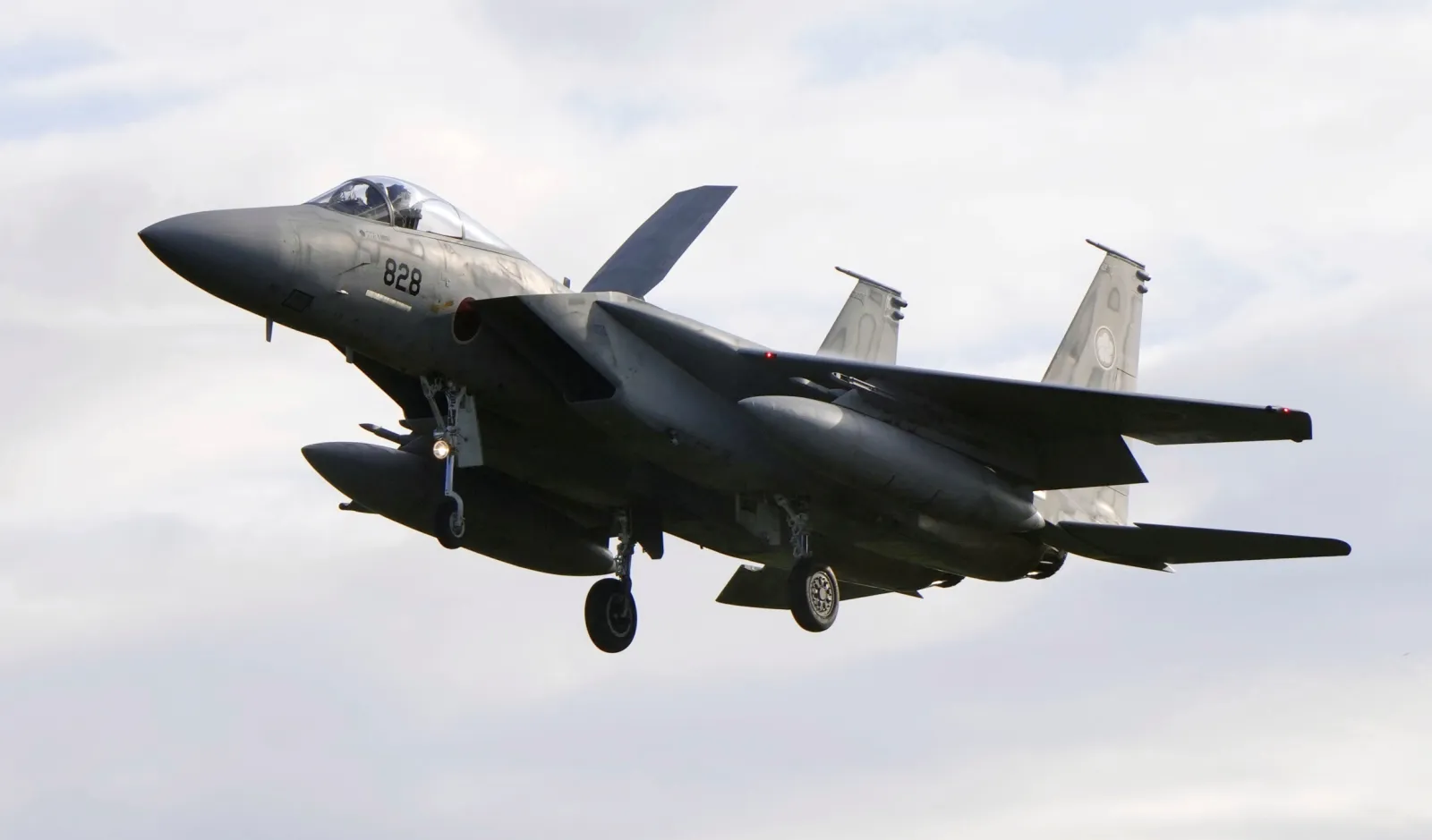
The incident occurred over international waters southeast of Japan’s Okinawa Island on Saturday, when Chinese J-15 jets, launched from an aircraft carrier, locked their radars on Japanese F-15 jets. It comes amid tensions between the two East Asian nations over possible Japanese intervention in the event of a Chinese blockade of Taiwan.
Any miscalculation or unsafe maneuver in an aerial encounter could have serious consequences. In 2001, a Chinese fighter jet collided with a U.S. spy plane over the South China Sea after making close passes, killing the Chinese pilot and prompting the detention of the U.S. crew, which made an unauthorized emergency landing in China.
What To Know
David Cenciotti, the editor of the military website the Aviationist, told Newsweek that radar lock-on occurs when a fighter aircraft switches from a general search of an area to fire control mode, continuously tracking a specific target to provide data to weapons.
“Lock-on is a prerequisite for guiding radar homing missiles, so it is widely considered a serious escalation compared to routine surveillance,” he added. However, this does not automatically mean the fighter jet is about to launch its missiles on the target.
During peacetime, air forces rely on standard identification procedures, radio calls and visual contact to conduct interceptions in international airspace, which help ensure flight safety and prevent misunderstandings between the two sides, Cenciotti said.
While a lock-on is considered hostile intent not a hostile act, he said events like these are treated as escalatory behavior rather than normal operating procedures, since lock-on is normally reserved for situations where there is a “clear and imminent” threat.
According to the Chinese Defense Ministry, Japan repeatedly deployed jets into areas of the Chinese aircraft carrier’s exercise and training zones that had been announced in advance. It accused the Japanese military of harassing the Chinese naval task group.
As a former member of the Italian air force, Cenciotti also explained how NATO air forces train to conduct safe interceptions, requiring pilots to maintain professionalism, keep an appropriate distance and use clear communications when approaching a target.
“The goal is always to manage the tactical situation without escalating it,” he said. If pilots are suddenly targeted by fire control radar during peacetime operations, they are instructed to remain calm, follow commands from their superiors and record the event.
After returning to base, the incident would be fully analyzed and reported to national and NATO authorities, with the response moving to the political and diplomatic level, including warnings, formal complaints and coordination with allies, Cenciotti said.
The philosophy is to preserve situational awareness, avoid what he called “unnecessary reactions in the cockpit” and ensure that political leadership handles the consequences.
What People Are Saying
David Cenciotti, the editor of the military website the Aviationist, told Newsweek: “Lock-on is normally reserved for situations where there is a clear and imminent threat. Using it during routine interactions between fighters belonging to different nations is widely seen as aggressive since it increases the risk of miscalculation.”
Shinjiro Koizumi, Japan’s Defense Minister, said: “When the Self-Defense Forces aircraft was illuminated by the radar, it maintained a safe distance and carried out anti-aircraft violation measures in a professional manner throughout. Therefore, China’s claim that the Self-Defense Forces aircraft was interfered with is unfounded.”
Guo Jiakun, a spokesperson for China’s Foreign Ministry, said: “The incident arose from Japanese jets’ deliberate intrusion into China’s exercise and training zones and close-in reconnaissance and disruptions on China’s normal military activities. Yet, the Japanese side blamed it on China and sought to mislead the world by falsely accusing China of ‘radar illumination.’ China deplores and opposes the false accusation and has strongly protested to the Japanese side.”
What Happens Next
It remains to be seen whether China or Japan will release further details about the “radar lock-on” incident. The Japanese military is expected to continue monitoring the Chinese aircraft carrier and other aerial and maritime activities around the country.