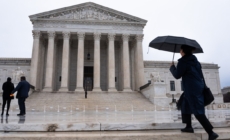
The Supreme Court has agreed to hear a case that could determine whether state and local governments can hold fossil fuel companies legally responsible for climate change-related harms, a question with billions of dollars at stake, dozens of active lawsuits, and the future of local climate accountability on the line.
Cities vs. Big Oil
The Supreme Court announced Monday it will review last year’s Colorado Supreme Court ruling that allowed Boulder and Boulder County’s climate accountability case to proceed against Suncor and ExxonMobil, according to The Washington Post.
The oil companies argued in their petition that federal law shields them from state-level accountability for in-state harms—effectively a bid for immunity from local climate litigation.
The Colorado Supreme Court ruled in May 2025 that federal law did not preempt Boulder’s claims and that the case could proceed under state law, according to a press release from Boulder County. The Trump administration took the unusual step of urging the Supreme Court to accept the case, even though it was not a direct party, The Washington Post reported.
Newsweek reached out to Suncor and ExxonMobil via email on Monday for comment.
A Precedent With National Reach
The outcome of the case could reshape the legal landscape for climate accountability nationwide.
Dozens of cities and municipalities are currently pursuing similar lawsuits against oil and gas companies, collectively seeking billions in damages. The cases are modeled on the legal strategy that held tobacco companies liable for the health consequences of smoking.
For Colorado specifically, the stakes are immediate. The state is among the fastest-warming in the nation, and Boulder and Boulder County say they face significant, rising costs to address climate impacts, costs they argue would otherwise fall on local taxpayers.
A ruling in favor of the oil companies could effectively shut down state-level climate litigation nationwide, while a ruling for Boulder could open the door for communities across the country to pursue similar accountability measures.
Seven Years in the Making
Boulder County, San Miguel County, and the City of Boulder originally sued Suncor and ExxonMobil in April 2018, alleging the companies knowingly sold fossil fuels that would cause measurable harm to Colorado—including intensified summer heat, more severe wildfires, and increased ground-level ozone—while concealing the dangers of their products, according to Boulder County. San Miguel County’s case has since been separated and is currently proceeding in Denver district court, where it was placed on hold pending the companies’ Supreme Court petition.
The case arrives as the court is already weighing related climate litigation. Last month, the justices heard arguments in a case involving a Louisiana community’s effort to preserve a $745 million jury verdict against Chevron, The Washington Post reported. The court’s landmark 2022 decision curbing the Environmental Protection Agency’s (EPA) ability to regulate greenhouse gases also looms as a relevant precedent.
What People Are Saying
ExxonMobil and Suncor, in their Supreme Court petition: “Boulder, Colorado, cannot make energy policy for the entire country.”
Boulder County Commissioner Ashley Stolzmann: “The oil companies have tried every avenue to delay our climate accountability case or move it to an out-of-state court system. As everyone continues to face rising costs that put budgets under pressure, we must hold oil companies accountable for the significant harm they’ve caused our communities.”
City of Boulder Mayor Aaron Brockett: “Local communities are living with the mounting costs of climate change. The Supreme Court should affirm Colorado’s right to hold these companies accountable for the harm they have caused in Colorado.”
City of Boulder Climate Initiatives Director Jonathan Koehn: “Boulder is already experiencing the effects of a rapidly warming climate, and the financial burden of adaptation should not fall solely on local taxpayers.”
EarthRights International Chief Litigation Attorney Richard Herz: “Exxon’s argument that state law cannot provide damages for in-state harms has no basis in the Constitution. The Supreme Court has rejected similar arguments, and should reject this one.”
What Happens Next
The Supreme Court is expected to hear oral arguments in the Boulder case during its current term, with a decision likely by late June. That ruling will determine whether Boulder’s lawsuit can continue in state court and is expected to set binding precedent for dozens of similar climate cases nationwide.
In a polarized era, the center is dismissed as bland. At Newsweek, ours is different: The Courageous Center—it’s not “both sides,” it’s sharp, challenging and alive with ideas. We follow facts, not factions. If that sounds like the kind of journalism you want to see thrive, we need you.
When you become a Newsweek Member, you support a mission to keep the center strong and vibrant. Members enjoy: Ad-free browsing, exclusive content and editor conversations. Help keep the center courageous. Join today.