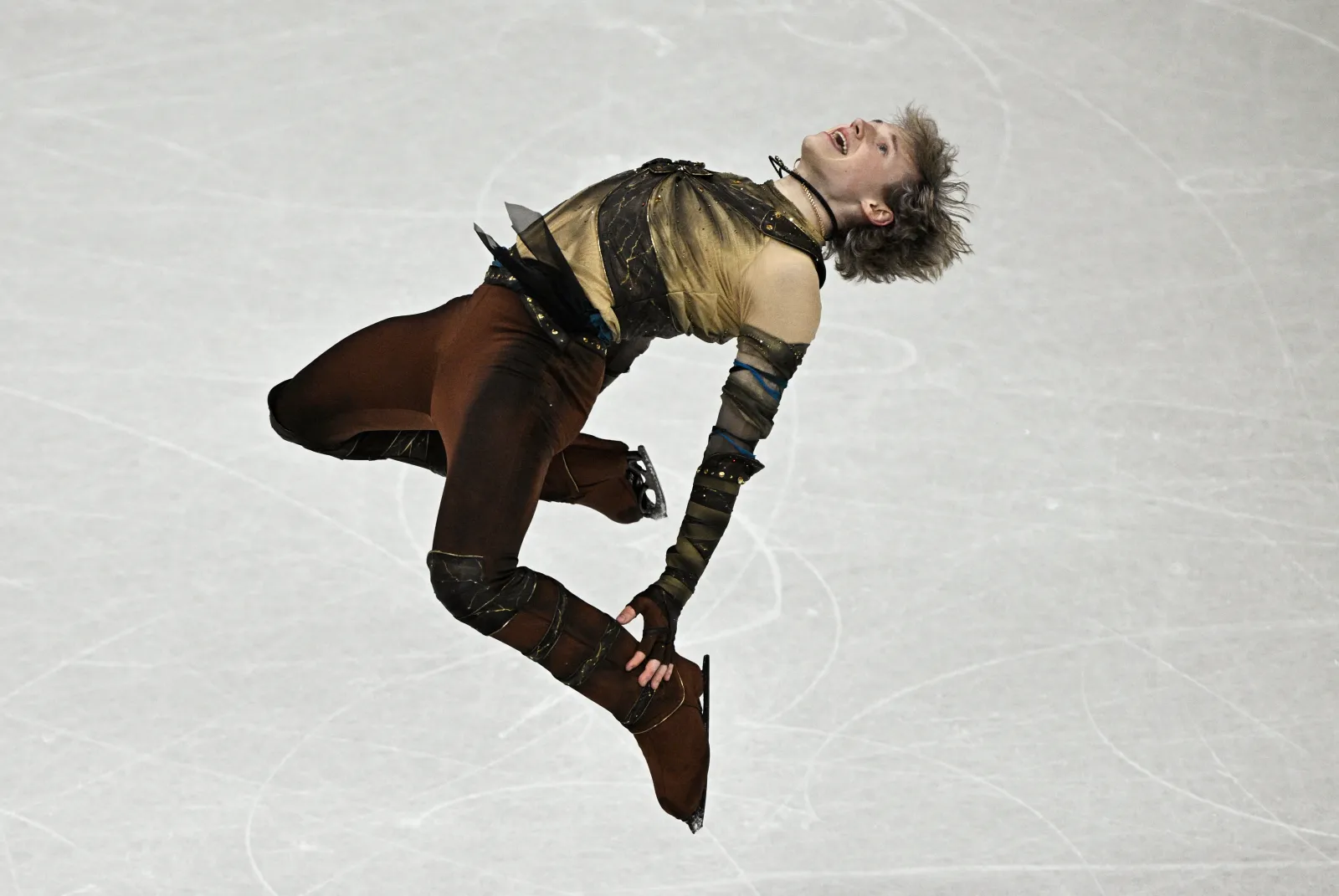
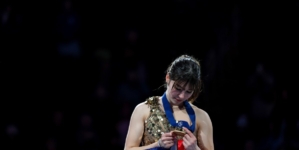
One week ago, Ilia Malinin walked on air.
He strolled through the tunnels of PalaItalia Santa Giulia, wearing a “Quad God” tank top and a smile, the weight of his country and the world on his shoulders.
Malinin held numerous interviews before the Winter Olympic Games in Milan, the back-to-back world champion discussing what was motivating him heading into the biggest competition of his life.
After not being chosen following the 2022 Beijing Games, where he was the second-best American figure skater behind Nathan Chen, Malinin had a mission at his first-ever Games.
“I want to put on a performance that people will remember,” he said in a pre-Olympics interview.
To him, winning gold or breaking his own world records in the Olympics wasn’t the main thing that drove him to skate under the lights in Italy.
It was to do something greater.
More news: Who are Ilia Malinin’s Parents? What We Know About Tatiana and Roman
After being unbeaten in competition for over two years, Malinin stated that he wanted to change how casual fans viewed his sport. He wanted to prove, through his physics-bending jumps and presentation, that figure skating is one of the most physically demanding and difficult disciplines in the world.
On the opening weekend of the Milan Games, Malinin wanted to prove just that. Although he was shaky in his debut performance, finishing in second place in the team event short program to Japan’s Yuma Kagiyama, he still wowed the crowds with his backflip on ice.
From there, social media was abuzz with new fans discovering Malinin’s majesty. His Google commercial showcasing his quadruple axel, a move he’s only performed in competition, was played on a loop. His face was plastered across almost every Olympics ad on NBC, and his name was mentioned during the broadcast even when he wasn’t competing.
That Sunday on the opening weekend, Malinin made a statement by competing in the free skate of the team event a day following his up-and-down short program.
Team USA needed him, and like a superhero he was built to be, he delivered. The 21-year-old put on a phenomenal routine, landed a one-skated backflip, and pumped his arms to the crowd as he helped his country prevail by one point over rivals Japan.
If his Olympic story ended there, the final image of Malinin would be him being lifted in the air by his USA teammates in triumph.
But it wasn’t the end.
Instead of confetti and end credits, the movie continued, and the hype turned into an avalanche.
More news: Ilia Malinin Planning Hardest Olympic Figure Skating Routine in History
Malinin was now aiming for history. For greatness. After winning the team event but not unleashing the quad axel, tension built for what he would showcase in the men’s individual competition.
Instead of discussing whether Kagayama or anyone else could beat him, the narrative shifted to how Malinin would win. Oddsmakers had him as such a favorite that you’d almost need to wager your life savings to make any money on him winning.
Whereas other events featured rivalries and debates over who would win, Malinin was already in the discussion about what he would do in four years at the French Alps Games. Could he match the regarded men’s greatest of all time, Yuzuru Hanyu, with back-to-back golds?
In the short program of the men’s individual competition, Malinin continued his ascent to the heavens. While his peers flailed and flopped onto the ice, he was clinical. In the weaker of his two segments, Malinin exited with a five-point lead heading into the free skate, where the American was undeniable.
More Google ads. More morning show interviews. More NBC commercials. More social media graphics featuring Malinin as a mountain, with every other competitor looking up at him like he’s Everest.
On the surface, it seemed as if Malinin was walking into Friday’s free skate finale as if it were a coronation of a new king. After years of dominating the Grand Prix and national circuit, the “Quad God” would take his rightful throne, succeeding Hanyu and Chen.
Internally, though, Malinin was tired.
He admitted as much after his short program, which put him in a gold-medal-winning position.
“I feel [super tired],” Malinin told the Japanese reporters in their own language following the Olympic-leading routine. “I fought for every moment out there. Just going out there was such an honor, getting a chance to try this ice again, the short program [after] the team event before.”
More news: Ilia Malinin Sounds Off on Team USA After Stunning Gold Medal Loss
On the day that was supposed to be the pinnacle of his career, everything seemed normal for Malinin. More interviews with top television companies in America, putting out their pieces before his triumphant win.
After almost every skater in the final round, the cameras would pan back to Malinin in the tunnels or in the training room. He’d be smiling, warming up, kicking a ball around.
As other men fell throughout the night on the choppy ice, it was brushed aside as incredible athletes — but regular humans — falling to the pressures of the Olympics.
Malinin wasn’t human, remember? He was something more. Something special. The type of generational athlete that comes along once in a few decades, like a shooting star caught at the perfect moment in time.
So even when his two top rivals for the gold medal, Kagiyama and France’s Adam Siao Him Fa, tumbled during their routines, it was treated as a clear golden road for Malinin to skate onto the ice to claim what was his.
As he began his routine, his own narration echoed throughout the arena.
“The only true wisdom is knowing that you know nothing.”
Seconds later, in what was supposed to be the highlight of the entire Olympics, when he landed the quadruple axel, it turned into confusion. Malinin, in the moment, decided not to attempt the maneuver.
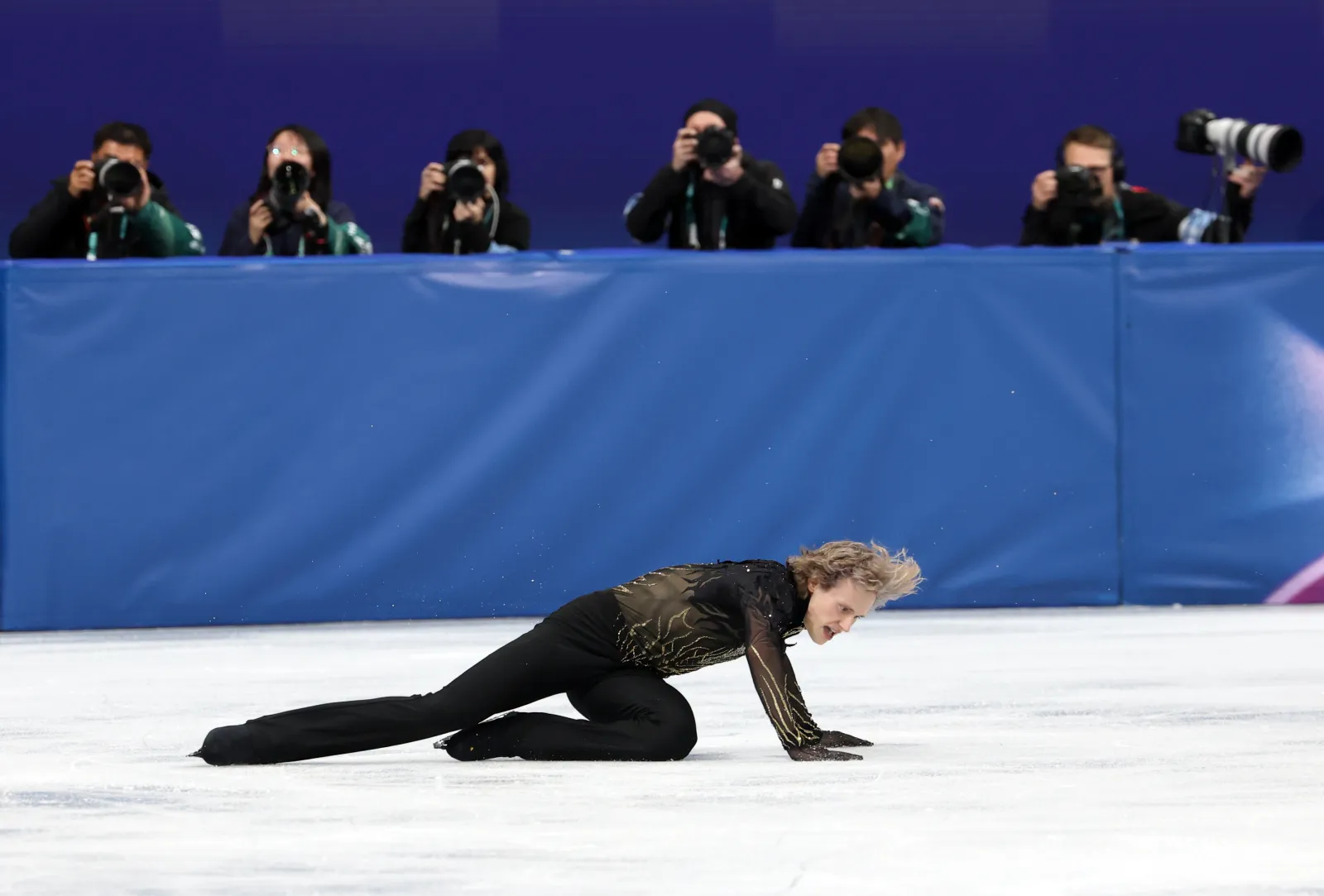
The confusion would soon turn to tension as, like a dozen other skaters that night, the world champion fell to the ice.
Human.
That tension would break into a silent awkwardness as the usually confident, methodical super athlete continued to stumble over moves he’d performed a million times before.
Another fall.
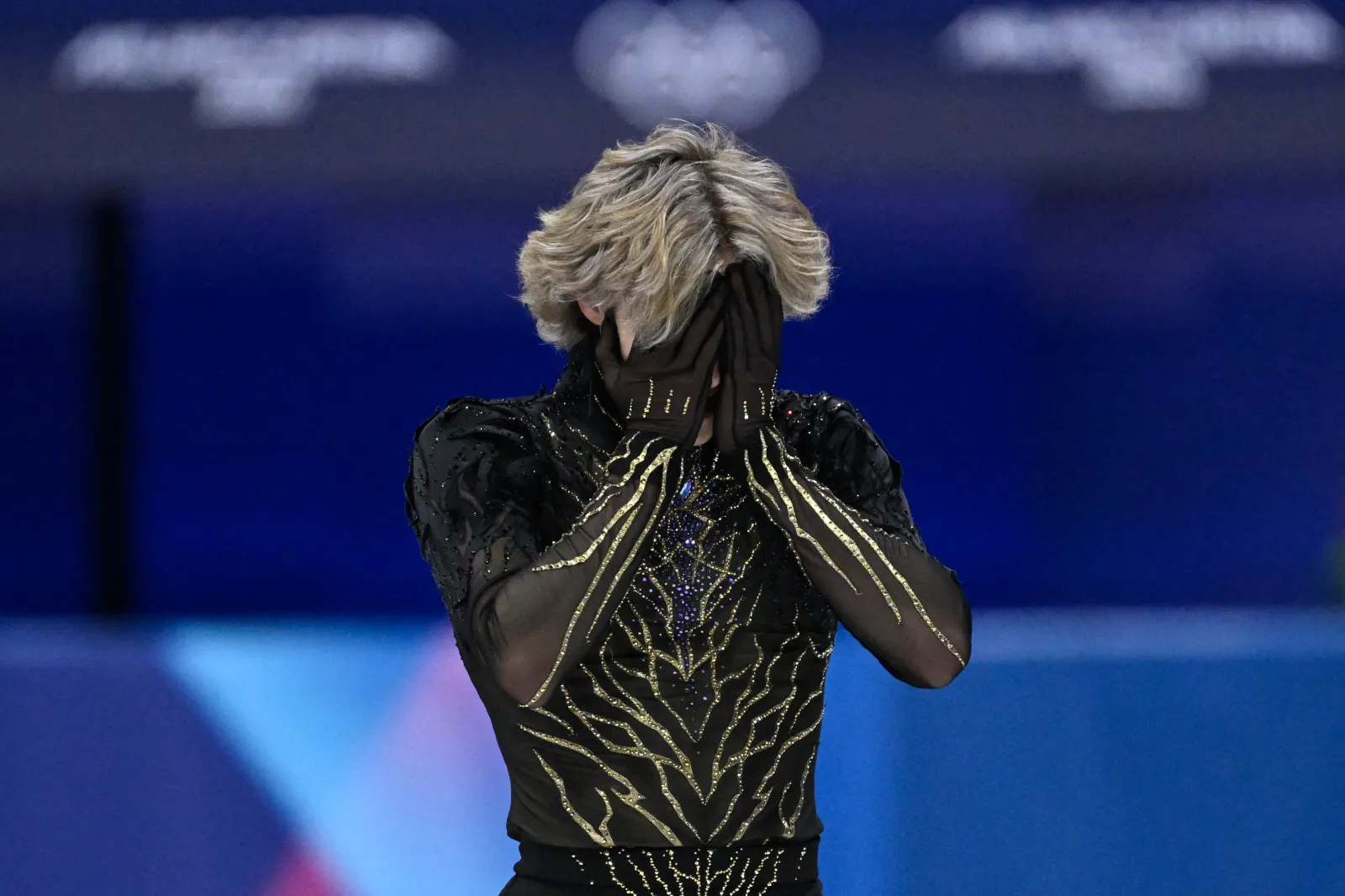
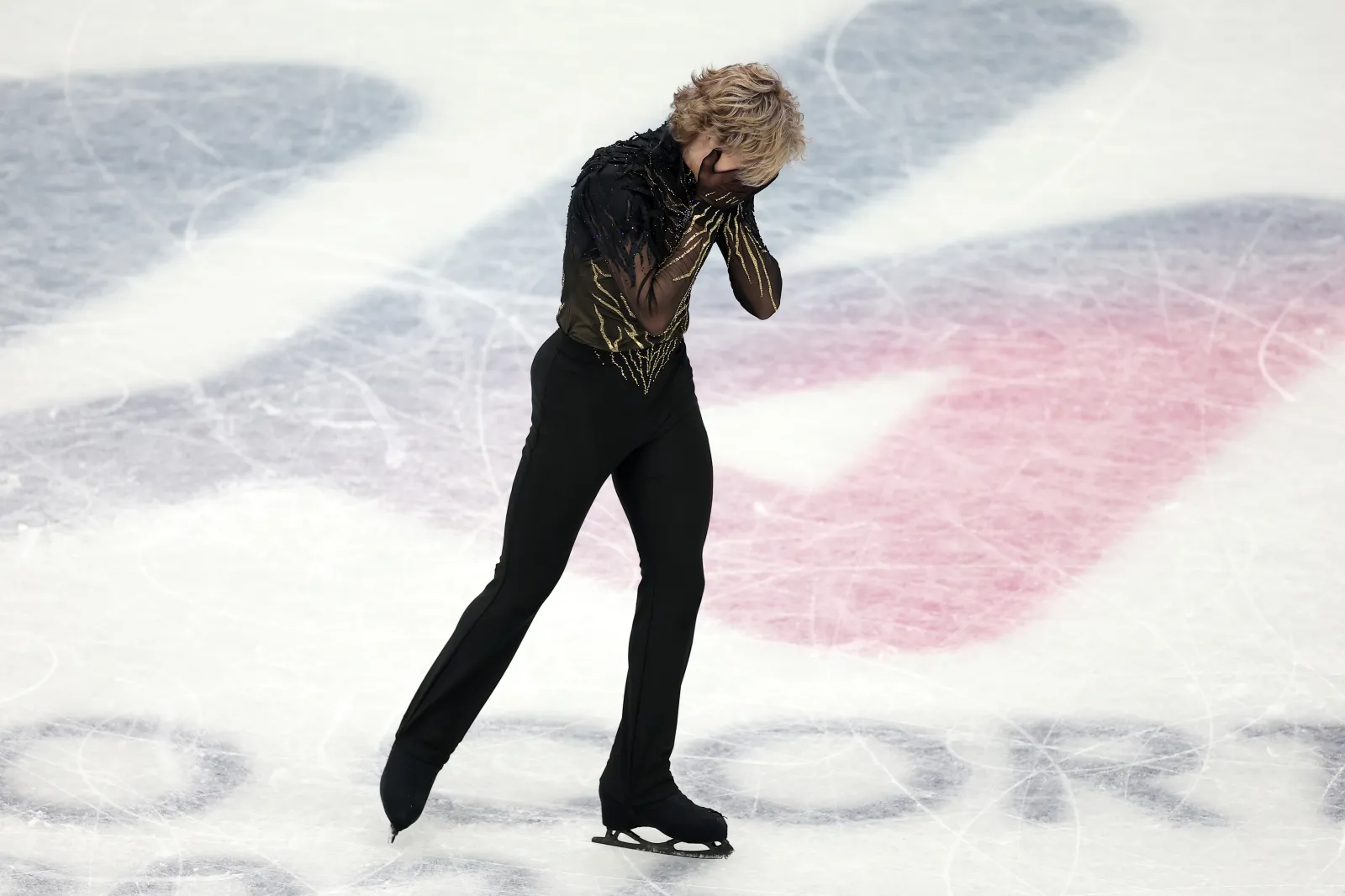
It was as if Malinin was fighting himself through his routine, shrinking from the god-like image presented in commercials to the young kid he was. By the time he struck his final pose to the crowd, tears were already welling up in his eyes.
He skated off the ice with a stunned look that matched the reaction of the crowd. Malinin joined his father and coach, Roman Skorniakov, furiously complaining that if Team USA had sent him to Beijing four years earlier, this would never have happened.
“They all think it’s easy,” he muttered on a hot microphone picked up by broadcast. “It’s not easy.”
More news: Olympics Facing Massive Backlash Over Disastrous Figure Skating Ice Quality
Malinin had to sit and watch as his coronation turned into a catastrophe, falling from first place to off the podium entirely in eighth. While he showed great sportsmanship by congratulating the shocking gold medal winner, Mikhail Shaidorov of Kazakhstan, the world champion was knocked out on his feet. Broken.
“Especially going into that starting pose, I just felt like all the just traumatic moments of my life really just started flooding my head,” he admitted in a post-event interview. “It was just like so many negative thoughts that just flooded into there, and I just did not handle it.”
He explained that he had no idea what happened during the performance. His mind, body, and spirit were all out of sync, leading to mistakes he’d normally commit even in practice.
The commentators, once loud and booming, turned into whispers. Those same commercials played hours prior continued to run, but now with a dull ache underneath them.
Like Nathan Chen, Simone Biles, and many before and after him, Malinin was put front and center as the face of these Games. A supernatural, superhuman talent who had perfected their craft and was ready to take that step under the global microscope.
Since Malinin’s historic upset loss, a debate has been raging on why Olympic athletes are often held on a pedestal with unfathomable expectations before competing.
The reason is that Olympians are the closest thing we have in modern times to fairy tales.
For a LeBron James or Lionel Messi, they have their peaks and valleys, but they’re staples in the common person’s life. It doesn’t matter if you’re a diehard sports fan or not; you know what James ate for dinner on Tuesday and where Messi is vacationing.
If a sports team, F1 driver, or tennis player fails, there’s always next season. There’s always next year. You can see the progress and follow along with that story.
For Olympians, unless you’re a diehard fan of that discipline, they come in and out of our lives like folk heroes. They take over social media and televisions for a month straight, and then they’re gone, buried in our brains with their lasting image until possibly four years later if they return to compete.
Shaun White is 39 years old and now works for NBC, but many viewers will always remember him from 20 years ago as the teenager with flowing red hair and the American flag draped across his back.
It’s the beauty and the horrors of the Olympics. A lifetime of success and dedication to your craft, often boiling down to one week where a single photo can define your entire career to millions around the world.
More news: Ilia Malinin Breaks Down in Tears After Falls Cost Him Olympic Gold
For the “Quad God,” he is lucky enough that Milan will most likely not be the final chapter of his Olympic journey. The snapshot of him losing will continue, but unlike others, he will have a chance to replace it in four years, at the 2030 Games in the French Alps.
Now, he knows the great truth. For thousands of years, the Olympics have shed light on humans who were believed to be gods.
Malinin is not the first, and he certainly won’t be the last.
“This whole day was going really solid, and I just thought all I needed to do was trust the process I use in every competition,” Malinin said.
“But it’s not any other competition. It’s the Olympics.”