BEIJING — For President Donald Trump, global power may boil down to the United States and China — what he calls the “G2,” or Group of Two. But China is less enamored with the idea, at least publicly.
The concept of a “G2” — a more exclusive version of the Group of 7 or Group of 20 forums — was introduced in 2005 by American economist C. Fred Bergsten to underscore the importance of communication between the world’s two biggest economies. Though it was initially embraced by some policymakers, the idea fell out of favor in Washington amid rising tensions with Beijing, including during Trump’s first term.
Last fall, however, Trump repeatedly used the term “G2” to refer to his meeting with Chinese President Xi Jinping in South Korea without saying how a “G2” world order would work in practice. He is set to meet with Xi again when he travels to China later this month.
For China, Trump’s casual use of “G2” is an acknowledgment of its growing power, suggesting that the U.S. and China are global peers and should have equal say in international affairs. But for U.S. allies, it raises fears that Washington and Beijing could cut them out of important decision-making and make deals that work against their interests.
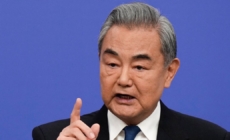
Chinese Foreign Minister Wang Yi, China’s top diplomat, sought to allay such fears Sunday at a news conference on the sidelines of China’s annual legislative session in Beijing.
“There is no doubt that China and the U.S. have a significant impact on the world. But we should not forget there are more than 190 countries on our planet,” he said in response to a question from NBC News. “World history has always been written by many countries together, and the future of humanity will be forged through the collective efforts of all nations.”
The “G2” concept is a thorny one for China, which bases much of its diplomacy in the Global South on opposing the idea that major powers should dictate to smaller ones. It is also reluctant to take on more responsibility for global governance if it means being drawn into conflicts in the Middle East and elsewhere that have stymied the U.S.
Wang said China will “never seek hegemony or expansion,” and that it wants to build “an equal and orderly multipolar world.”
“Looking back in history, great power rivalry and bloc confrontation have invariably inflicted disaster and pain on humanity,” he said. “Therefore, China will never take the beaten path of seeking hegemony as its strength grows. Nor do we subscribe to the logic that the world can be run by major countries.”
Though the questions and answers at Wang’s annual news conference are coordinated in advance, it is a rare opportunity to hear directly from one of China’s highest-ranking officials. His answers signal how China sees its position in the world and its relations with other countries, including the U.S.
U.S.-China relations have “far-reaching and global implications,” Wang said.
“Turning our backs on each other would only lead to mutual misperception and miscalculation,” he said. “Sliding into conflict or confrontation could drag the whole world down.”
Though U.S.-China relations have been tested by Trump’s global tariffs, he often talks about his “great relationship” with Xi and has spoken with him twice by phone since their October meeting.
“It is heartening to see that the presidents of the two countries have led by example, by maintaining good interactions at the top level,” Wang said. “They have provided important strategic safeguard for the China-U.S. relationship to improve and move forward, and they have brought their relationship back on an even keel after the ups and downs.”
Trump and Xi are set to meet up to four times this year, starting with a three-day trip to China by Trump that the White House says will start March 31.
Xi is then expected to reciprocate with a trip to the U.S., and he could also attend the G20 summit in Miami in December. In November, Trump may attend the Asia-Pacific Economic Cooperation summit that China is hosting in Shenzhen.
2026 is a “big year” for U.S.-China relations, Wang said.
“The agenda of high-level exchanges is already on the table,” he said. “What the two sides need to do now is to make thorough preparations accordingly, create a suitable environment, manage the risks that do exist and remove unnecessary disruptions.”
One potential disruption to the Trump-Xi summit is the ongoing U.S.-Israeli strikes in Iran, which has close ties with China.
On Sunday, Wang reiterated Beijing’s calls for an immediate halt to military action and a return to dialogue, saying the war with Iran “does no one any good.”
“Seeing the Middle East engulfed in flames, I want to say that this is a war that should not have happened,” he said. “It is a war that does no one any good.”
Wang also rejected the “abuse of force” and violations of international law.
“The law of the jungle must not return and rule the world,” he said. “Willful use of force does not prove one’s strength.”