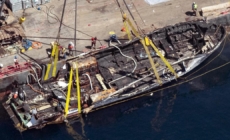
A federal appeals court on Tuesday upheld the manslaughter conviction of the captain of the Conception dive boat who was in charge when 34 people died in a fire while trapped below deck over Labor Day weekend in 2019 off the Channel Islands.
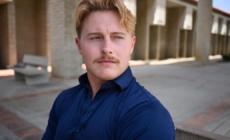
Jerry Boylan 72, was sentenced to four years in federal prison in May 2024 for his role in the deadliest maritime disaster in modern California history. But Boylan, since his sentencing, has remained free pending the appeal.
Boylan had been a captain for 34 years but prosecutors showed that he failed to appoint an overnight roving watch on the night of the fire, ignoring the Certificate of Inspection requirements, which were hanging in his own wheelhouse. Nor did he institute adequate fire safety drills. Prosecutors argued that this left his poorly trained, panic-stricken crew effectively useless amid the fire, which possibly originated in a trash can sometime after 2:35 a.m.
As the flames spread, blocking the exits for those crowded in the bunk room below, a member of Boylan’s crew twice ran right by a 50-foot fire hose overhead, trial evidence showed. Boylan himself called in a Mayday at 3:14 a.m. and jumped overboard, which prosecutors described as abandoning ship.
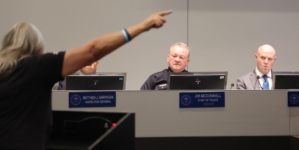
“I am not surprised that the U.S. Court of Appeals for the 9th Circuit upheld the jury conviction of Jerry Boylan. As I watched the trial unfold I was at times overwhelmed by the blatant disregard Mr. Boylan and his employers had for the safety of passengers on their vessels,” said Maggie Strom, whose husband, Ted, was among the victims. “The original conviction for seaman’s manslaughter of 34 people was the correct verdict and it has been reaffirmed. Mr. Boylan has spent the last 6½ years free to live his life with no consequences for his blatant disregard for human life. It is important that now he is finally held to account.”
Clark and Kathleen McIlvain, the parents of another boat victim, Charles McIlvain, described themselves as “relieved” over the appeals court decision.
“Captain Boylan hasn’t spent one day in custody but he will finally be held accountable and serve his sentence,” they said in a statement. “We hope this sends a message to other Captains that you will be held responsible for the lives under your watch.”
In appealing his sentence, Boylan’s lawyers argued that the trial judge, U.S. Dist. Court Judge George Wu, misstated the law required to prove guilt, saying if Boylan “engaged in misconduct and/or acted with gross negligence,” he could be found guilty of the charge.
According to Boylan’s federal appeals team, the term “misconduct” permitted the jury to convict him of something less than gross negligence, contrary to the required standard.
But the 9th Circuit Court of Appeals panel concluded that nowhere in the text is “gross negligence” required. “The panel noted that the laws regarding a seaman’s manslaughter differ from those of involuntary manslaughter.”
Ninth Circuit Appeals Judge John B. Owens, in writing the opinion, noted the jury instructions explicitly cautioned against conviction based on a lower standard than negligence, calling the evidence against Boylan “overwhelming.”
After a two-week trial, a federal jury in November 2023 found Boylan committed gross negligence in the deaths of the 33 passengers and one crew member who were trapped in a windowless bunk room when the boat caught fire before dawn on Sept. 2, 2019, off Santa Cruz Island.
In describing the deadly events, the 9th Circuit panel named all the victims and described their final moments. “While they valiantly tried to escape the burning boat — managing even to activate one of the fire extinguishers — none survived, all dying of smoke inhalation and asphyxiation. A brief video, recorded by one of the trapped passengers, showed their struggle to stay alive three minutes after Boylan called the Coast Guard and decided to jump overboard.”
The appeals panel noted that the government presented the testimony of the surviving crew members, as well as expert testimony about where the blaze began and a captain’s duty of care when it comes to fire safety on board vessels like the Conception and the jury found beyond a reasonable doubt that he “engaged in misconduct and/or acted with gross negligence.”
At sentencing, Wu said he found Boylan “incredibly remorseful” and that he had not “intended to do something bad.” The judge called it “one of the most difficult sentencings I’ve ever done.”
Boylan’s attorneys with the federal public defender’s office called it “an unstoppable inferno” and said there was little he could have done after waking amid the flames. His attorneys also argued that Boylan was merely following the custom of the company that owned the boat, Truth Aquatics, by assigning no one to overnight watch, and did not know that he was imperiling passengers. Prosecutors called it the “blaming your boss” defense.
During the trial, the families endured graphic testimony about the effort to recover the bodies from the charred boat after it sunk 56 feet. They watched a 24-second video, found on an iPhone recovered from the wreck, recording the victims’ last moments alive.
On the tape, voices could be heard exclaiming, “There’s got to be a way out!” and “There’s got to be more extinguishers!” and “We’re gonna die …!”
His lawyers argued that none of the Truth Aquatics boats, nor any other boat in the waters off Santa Barbara, required a roving night watch at the time, and that it was unfair “to punish him for the failings of an entire industry.”
The deadly incident led to widespread reform and congressional action to regulate the small passenger-boat industry, with new requirements for escape hatches, smoke detectors and other safety measures.