Omišalj oil terminal
The MOL Group has approached the Hungarian Ministry of Energy to request the release of strategic oil reserves after oil deliveries via the Druzhba pipeline ceased on January 27, 2026. With this measure, the group is ensuring that security of supply in the region remains guaranteed.
It was noted that MOL has begun supplying its refineries with crude oil by sea to compensate for the shortfall. “Due to the longer transport times by sea, this supply route is being established gradually: the first deliveries are expected to arrive at the Croatian port of Omišalj in early March, from where it will take another 5 to 12 days for the crude oil to reach the MOL Group’s refineries,” MOL said.
If deliveries from the east are not resumed in the next few days, Hungary may initially need to release around 250,000 tons of strategic oil reserves, they emphasized.
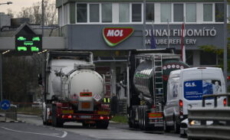
MOL’s Danube Refinery Photo: MTI/Hegedüs Róbert
As MOL mentions, there is close cooperation with the Slovak government so that the country can respond quickly to the situation. In accordance with European Union regulations, both countries have oil and fuel reserves available for about 90 days. The situation that has arisen does not jeopardize fuel supplies: the market is being supplied smoothly and MOL continues to operate as usual.
The failure of the Druzhba pipeline could be a dress rehearsal for the Adriatic pipeline, especially after the Croatians also half-heartedly agreed to help Hungary.
The starting point is that the Janaf company, which operates the Adriatic pipeline – and thus the Croatian state budget – is highly dependent on meeting the oil needs of Hungary and Slovakia, as orders from its main customer, Serbia’s NIS, have declined in the months of U.S. sanctions against the NIS refinery.
If Janaf decides to meet Hungary and Slovakia’s demands, as it did yesterday, it may finally be known how much oil the Adriatic pipeline can actually transport, as there were conflicting statements from Hungarian and Croatian companies on this issue in the summer.
If there were to be a serious disruption to oil supplies in Hungary, MOL – as a listed company – would announce it. However, such a disruption could be avoided by increasing imports via the Adriatic. Unlike electricity and gas supplies, about which anyone can obtain information at any time, oil supplies are not transparent. In fact, we do not know where the oil comes from, where it goes, or how much is delivered, but can only rely on announcements.
However, it is telling that, according to MOL, 250,000 tons of reserves could be needed within a few days.
For Hungary, the Adriatic pipeline is the only viable alternative to the Druzhba pipeline. Although its own oil production is low, it has enough oil and oil product reserves for 90 days. The fire caused by oil products along the Druzhba pipeline took ten days to extinguish, but transport has not yet resumed, and there is no information on when this is planned.
Technically, the pipeline is operational, but due to a political decision by the Ukrainian leadership, no oil is being delivered, Péter Szijjártó said on Sunday. He explained that in this situation, Hungary and Slovakia would have to increase their oil imports via an alternative route – as explained above – via the Adriatic pipeline. He addressed his request in this regard, together with Slovak Minister of Economy Denisa Saková, in a letter to the Croatian government, to which the Croatians gave a response that could be described as peculiar.
Croatia has acted responsibly and transparently in the area of regional energy security – and will continue to do so for Hungary, with utmost respect for our Ukrainian allies and their daily suffering,”
said Croatian Minister of Economy Ante Šušnjar. He also recalled that he had always claimed that Janaf had sufficient capacity for this, even when allegations arose that this was not the case.
“When we were accused of profiteering from the war, our tariffs were transparent and market-based, and they remain so today. When Croatia was branded an unreliable transit country, we operated the critical infrastructure in a stable and trouble-free manner, regardless of all political accusations,” Šušnjar wrote. He emphasized that Croatia would not allow the fuel supply to Central Europe to be jeopardized.
We are ready to help resolve acute disruptions in accordance with EU legislation and OFAC regulations. No one should be left without fuel,”
said the Croatian Minister of Economy.
Related article
Janaf Withholds 90,000 Tons of Crude amid Dispute with MOL

The value of the withheld shipment is estimated at around $50 million.Continue reading
Via Világgazdaság; Featured image: Wikimedia Commons
The post Druzhba Outage: MOL Requests Release of Strategic Oil Reserves appeared first on Hungary Today.
Source link