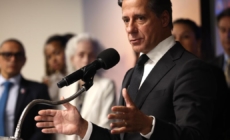
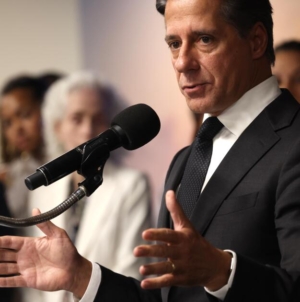
Hungarian Foreign Minister Péter Szijjártó reaffirmed Hungary’s commitment to energy sovereignty and low utility costs during a visit to Moscow for the Russian Energy Week forum.
Speaking alongside Rosatom CEO Alexey Likhachev, FM Szijjártó announced that Hungary’s Paks II nuclear expansion project will reach a major milestone by February, with the first concrete poured for the new reactor units. This will mark the official start of construction under International Atomic Energy Agency (IAEA) standards.
Hungary aims to connect two new nuclear reactor units to the grid by the early 2030s. Once completed, nuclear power is expected to cover 70% of Hungary’s electricity needs.
“Nuclear energy is essential for Hungary’s secure and affordable energy supply,” FM Szijjártó said, highlighting the country’s lack of domestic oil and gas resources. He added that expanding nuclear capacity is necessary to maintain Hungary’s position as the EU country with the lowest household gas prices.
The minister also addressed growing concerns about European pressure to reduce dependence on Russian energy. “Hungarian families will not pay higher gas prices just to satisfy ideological or political agendas,” he stated. “Energy security is a matter of sovereignty.”
FM Szijjártó criticized Brussels’ push for energy diversification as counterproductive, arguing that phasing out existing, reliable infrastructure—such as the TurkStream and Druzhba pipelines—could jeopardize national supply. “Removing one of two pipelines in the name of diversification is illogical,” he said.
Hungary currently receives over six billion cubic meters of gas annually from Russia, a volume that cannot be fully replaced if disrupted. While Hungary has signed long-term LNG agreements with Shell and ENGIE and imports energy from several countries, FM Szijjártó insisted that all available routes and sources must remain part of the national energy mix.
“Energy supply is not about ideology,” he stressed. “It is about physics, math, and experience. We will use our sovereign right to choose what works best for us.”
Praising the reliability of Russia as an energy partner, FM Szijjártó emphasized that Hungary has never experienced disruptions in delivery. He concluded by stating that Hungary would continue to resist international pressure to change its energy strategy and welcomed the growing influence of “patriotic” parties across Europe, which he believes may steer the continent back toward “rational and pragmatic” policies.
Related article
Rosatom Cleared to Supply Nuclear Equipment for Hungary’s Paks II Power Plant
The Russian state-owned company’s machine manufacturing division has passed all audit requirements, paving the way for the delivery of key components for the new nuclear units.Continue reading
Via MTI; Featured image: Facebook/Szijjártó Péter
The post Foreign Minister In Moscow: We Will Not Trade Energy Security for EU Politics appeared first on Hungary Today.
Source link