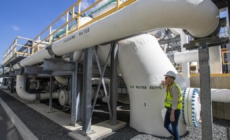
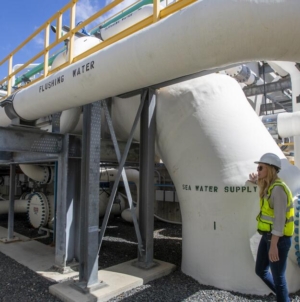
Drilling on the first geothermal well to provide renewable and sustainable geothermal energy for Liszt Ferenc International Airport in May 2025
From the beginning of March, non-repayable subsidies and an interest-free loan program will encourage geothermal investments totaling HUF 29 billion (EUR 75 million / EUR 1=HUF 390), the Ministry of Energy announced in a statement on Monday.
As highlighted, Hungary is already at the forefront of geothermal energy utilization in Europe, taking advantage of its favorable conditions. The Jedlik Ányos Energy Program is helping to further advance this development with an unprecedented amount of funding. The key objectives of Hungarian energy policy include strengthening self-sufficiency, ensuring affordable prices, and greening the sector, the ministry stated. The diverse uses of geothermal energy serve all three of these goals well, they explained.
In the Carpathian Basin, the thickness of the earth’s crust is half the European average, resulting in higher underground temperatures.
The rocks that make up the region are capable of storing large amounts of natural underground water resources. Geothermal energy is a clean energy source that is available regardless of weather and time of day, but its use requires costly investments that carry significant financial risks,
said the ministry.
Two of the three geothermal tenders under the Jedlik Ányos Energy Program will open on March 2, 2026. The largest call for proposals, with a budget of HUF 19 billion, offers interest-free loans to businesses. Only investments outside Budapest are eligible for support, with nearly two-thirds of the available funds earmarked for less developed regions.
In the other HUF 10 billion tender starting on Monday, ten to twenty rural projects can receive at least HUF 40 million but no more than HUF 1 billion in support. If the drilling proves successful, the state contribution can cover one-tenth of the total eligible costs, while in case of failure, it can cover up to half.
The third geothermal tender was opened in January as part of the Jedlik program, the announcement noted. The HUF 12 billion subsidy can be used to develop geothermal power generation systems.
If the total HUF 41 billion targeted contribution is put to good use, geothermal energy could become a driving force in the domestic green economy.
Under the National Geothermal Energy Utilization Concept, Hungary will double domestic consumption by 2030, increasing the base value of 6.4 petajoules by a factor of two. The share of geothermal energy in total heat production could rise to 25-30 percent.
New uses could replace a total of 1-1.2 billion cubic meters of natural gas by 2035, significantly reducing import exposure,
the ministry noted.
The Jedlik Ányos Energy Program, launched in early 2026, has made a total of nearly HUF 130 billion available for sectoral development. Domestic companies can receive HUF 50 billion in non-repayable grants from the Entrepreneurial Energy Storage Program for the installation of industrial energy storage facilities. Energy efficiency upgrades at rural sites of commercial companies are encouraged by HUF 38.7 billion in loans, according to a statement from the Ministry of Energy.
Related article
MOL Taps Into the Earth: Geothermal Energy Explored at Danube Refinery
Advanced seismic surveys could unlock a cleaner energy future as the company deepens its green transition beneath its own facilities.Continue reading
Via MTI, Featured image: MTI/Máthé Zoltán
The post Geothermal Energy Set to Emerge as a Driving Force in the Domestic Green Economy appeared first on Hungary Today.
Source link