“Unless there is a force majeure event, the construction of the Ferihegy express railway is irreversible,” said Máté Lóga, State Secretary of the Ministry for National Economy, at a background briefing held at the ministry. On Wednesday morning, a concession tender for the construction of the Ferihegy express railway was published in the EU public procurement bulletin.
Máté Lóga, State Secretary at the Ministry for National Economy, said that when they bought Budapest Airport, their main strategic goal was to acquire not just a company, but a broad-based jewel in the crown of the national economy. They also had a vision of where they wanted to position Budapest Airport in Central and Eastern Europe. One aspect of this was how to make the terminals accessible by rail.
We came to the conclusion that it would be worthwhile to build it in the form of a concession, involving private capital”
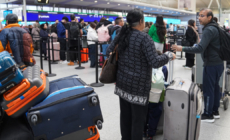
said the State Secretary, explaining that Budapest Airport will handle nearly 20 million passengers this year, of whom roughly 40-50 percent are willing to use public transportation and already do so.
In other words, there are already 10 million potential passengers who would be willing to take the train.
The €1 billion investment will see the construction of 27 km of railway track between Budapest Kőbánya-Kispest (southeastern part of Budapest) and Monor (a town in Pest County, about 30 km southeast of central Budapest), which will be an integrated part of the network, thus MÁV (the Hungarian state railways) will be responsible for drawing up the timetable. MÁV and the concession company will have to conclude a service contract.
Regarding the concession structure, Máté Lóga said that all risk elements are borne by the concessionaire. The state does not wish to pay availability fees, therefore smart development and operation are needed to enable the concession company to attract as many passengers as possible to the station. The ticket price will include two things:
- a track usage fee and
- a platform fee, similar to the system at Heathrow.
This will generate two types of revenue for the concession company, with the platform fee accounting for 80-90 percent of the revenue. According to his calculations, with a platform fee of around 4,000 forints (10.39 euros), it will be competitive with taxis and other services.
At the same time, the Hungarian state would also like to participate in the project as a financial investor with a 20 percent stake in order to have a stake in the investment, and they are looking for domestic or foreign companies for the remaining 80 percent.
They have sought a financing structure that is sufficiently attractive to the domestic and international communities. They believe that the project is marketable, although they cannot negotiate because that is the job of the consortium, “but we are in London and we can see that things are moving forward.”
The State Secretary indicated that it is important for banks that this is not a greenfield investment, but a hybrid one.
“It is an investment that can be financed by international and domestic banks and is sufficiently attractive”, he said, adding that the project should be able to generate double-digit returns. The project will cost around 1 billion euros, and if it can deliver these figures, it will be viable.
Although it has an environmental permit, the construction plan will have to be resubmitted and expropriations will be necessary.
Máté Lóga revealed that the station could be built on the site of the current Holiday car park, which would result in the loss of 156 parking spaces.
Construction could begin in the second half of 2028, with the first phase completed by 2030-31 and the second phase by 2034.
When asked whether Hungarian railway capacity would be needed during construction, he replied in the affirmative. According to the State Secretary, financing will also be available to Hungarian banks. “There is a chance that the concessionaire will strive for a healthy 50-50 percent international-domestic ratio,” he noted.
Related article
6,000 Tons of Cargo Arrive at Szeged BYD Factory

The assembly lines at BYD’s first European plant will be ready by the end of 2025, with trial production starting in the first quarter of 2026.Continue reading
Via Világgazdaság; Featured photo: MTI/Szigetváry Zsolt
The post Government Launches €1 Billion Ferihegy Express Railway Concession appeared first on Hungary Today.
Source link