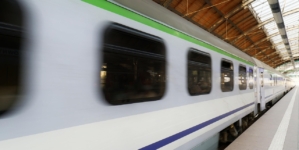
The dominance of the state railways on the Budapest–Vienna route is faltering. While Hungary’s MÁV struggles with declining domestic revenues, private operators such as Austria’s Westbahn and the Czech Republic’s RegioJet are entering the market with competitive prices and state-of-the-art technology.
For the Hungarian state-owned railway company MÁV, the route between Budapest and Vienna is one of the last remaining gold mines, reports iho.hu. Since the introduction of the low-cost Hungary pass by MÁV, domestic services have been unable to operate profitably from ticket sales alone.
International business, on the other hand, is thriving in terms of revenue sources.
In the first three quarters of 2025 alone, revenues from cross-border traffic amounted to 17.2 billion forints (44.5 million euros), accounting for around 13% of total turnover. An impressive 58% of this was attributable to tickets to Austria, underlining the enormous economic importance of this axis, writes the portal.
Czech company RegioJet has been shaking up this lucrative market since the summer of 2020. With ticket prices often starting at just 9-12 euros, the private company offers a radical pricing alternative to the established services of MÁV and ÖBB.
While passengers pay an average of around 30 euros on state railways, with last-minute prices for spontaneous travelers climbing as high as 55 euros, RegioJet caps its fares at around 35 euros, even immediately before departure. Since the last timetable change, the private competitor has already been operating four daily train pairs and plans to increase this to six connections per day.
As of December 2026, the Austrian Westbahn is also preparing to enter the Hungarian market.
The company has already submitted the necessary applications to offer five daily train pairs on the Budapest–Vienna–Salzburg–Munich route in the future. In order to provide this demanding cross-border service, Westbahn is relying on technological innovation from the Far East. The company has leased four six-car double-decker electric multiple units from the Chinese manufacturer CRRC ZELC, which were developed specifically for the European market.
These modern 4100 series trains are characterized by their multi-system capability. They can operate on both the Hungarian 25 kV power system and the 15 kV AC network commonly used in Austria and Germany, and can reach top speeds of up to 200 km/h. A prototype of these double-decker trains has already been extensively tested in the Hungarian town of Dunakeszi and retrofitted for the national EVM120 train control system in order to obtain the necessary approvals for the Hungarian rail network.
Westbahn’s entry into the market promises passengers not only more competition in terms of prices, but also significantly improved connections beyond the Austrian capital.
In future, travelers from Budapest will have convenient connections in Vienna to the existing Westbahn network towards Graz or Klagenfurt.
For MÁV and ÖBB, this poses a serious threat to their most important source of international revenue. If the private competitors expand their capacity to a total of eleven daily train pairs as planned, the state-owned service providers’ previous quasi-monopoly on this key route could easily be a thing of the past.
Related article
State Railways Take Over Struggling Dunakeszi Rail Vehicle Manufacturer
MÁV is putting an end to the company’s turbulent fate after a long period of uncertainty.Continue reading
Via iho.hu, Featured image: MTI/Hatházi Tamás
The post State Railways Face Growing Competition on Key International Route appeared first on Hungary Today.
Source link